Bathrooms That Handle Daily Moisture
Bathroom Remodeling in Euclid for fixtures that leak and tile that traps water behind grout lines
Leaking shower valves and vanities with water-damaged particleboard indicate a bathroom that needs more than cosmetic updates. SAID Project Development completes full bathroom renovations in Euclid, replacing showers, tubs, vanities, and fixtures while installing tile that directs water toward drains instead of into wall cavities. The work includes accessibility improvements like curbless showers or grab bar reinforcement, which require blocking installed behind drywall before tile goes up.
Bathroom remodeling addresses failures like grout that crumbles and lets water seep behind tile, tubs with cracked acrylic that can't be patched, and vanities where cabinet doors warp from constant humidity exposure. The process involves removing old fixtures down to the subfloor and wall studs, checking for rot or mold that indicates previous leaks, then installing moisture-resistant backer board, waterproof membranes in shower areas, and tile set on mortar beds that won't crack when the floor flexes.
Arrange a consultation to assess your current bathroom layout and identify specific moisture concerns.
How Bathroom Renovations Address Water Intrusion
Shower and tub replacement starts with evaluating whether the subfloor is solid or whether joists have softened from long-term leaks, which happens frequently in older homes where original installations lacked proper waterproofing. New installations use waterproof membranes that extend six inches beyond the shower curb and up walls to a height above the showerhead, creating a continuous barrier that directs water to the drain even if grout develops hairline cracks over time.
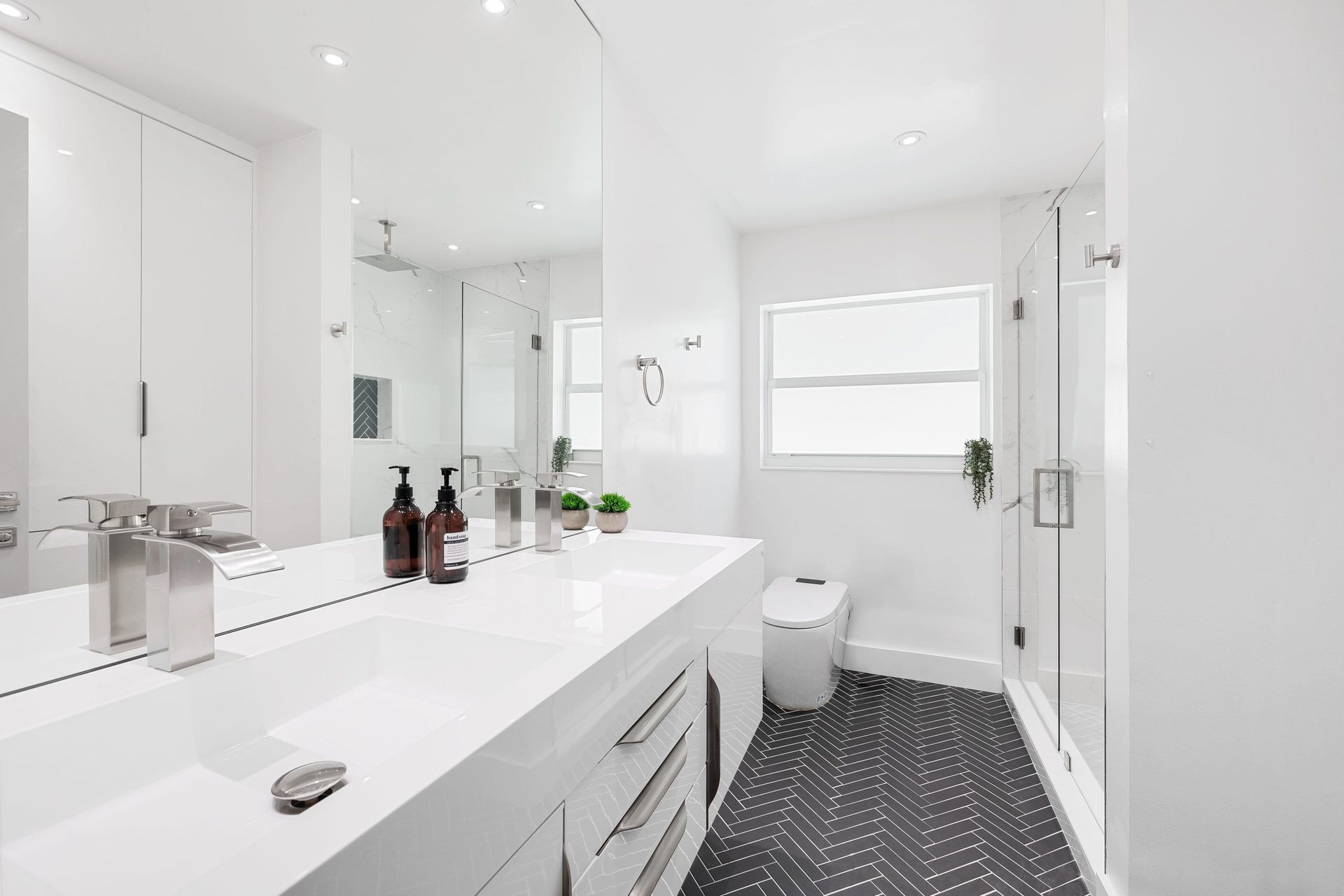
Once the renovation is complete, you'll notice tile that stays dry between uses because water doesn't pool in corners or along seams, vanities with drawers that open smoothly without sticking from swollen wood, and fixtures that don't drip or require constant handle adjustments to stop flow. Accessibility improvements like walk-in showers eliminate the step-over hazard of traditional tubs while allowing easier cleaning of surfaces without hard-to-reach corners.
Tile installation includes sloping the mortar bed toward the drain at a quarter-inch per foot so water doesn't sit on flat surfaces, and sealing penetrations where valve stems pass through tile to prevent water from running down pipes into wall cavities. Vanity upgrades often involve raising or lowering countertop height to match user preference and ensuring plumbing shutoff valves are accessible without removing drawers.
Common Questions About This Service
Bathroom renovations in Euclid often uncover hidden water damage or structural issues that weren't visible until demolition, so understanding what the process involves helps set realistic expectations.
What indicates that a bathroom needs full renovation rather than fixture replacement?
If the floor feels soft near the toilet or tub, if tile is loose and moves when you press on it, or if you see staining on the ceiling below the bathroom, water has compromised structural materials and surface updates won't address the underlying damage.
How does shower tile installation differ from wall tile in dry areas?
Shower tile requires waterproof membrane behind the backer board and sloped mortar beds under the tile so water flows to the drain, while tile in dry areas only needs level backing and standard thinset adhesive.
Why do some vanities develop mold even after bathroom remodeling?
Mold grows when ventilation is inadequate and humidity stays above sixty percent, or when the vanity lacks a sealed toe kick that keeps water from puddling under the cabinet after floor cleaning.
What accessibility improvements require structural work during bathroom remodeling in Euclid?
Curbless showers need the subfloor lowered to accommodate the drain assembly and sloped mortar bed, and grab bars require blocking installed between wall studs so fasteners anchor into solid wood rather than just drywall.
When should a bathroom remodel include plumbing rerouting?
Rerouting makes sense when you're moving the toilet location, adding a second sink, or upgrading to a shower system with body jets that require additional supply lines and larger drain capacity than the original installation provided.
SAID Project Development evaluates existing conditions before starting work and discusses options when concealed damage appears during demolition. Request a detailed estimate to review your bathroom's current state and the scope needed.